When a family member moves into Supported Independent Living (SIL), it can be both exciting and emotional. While participants often look forward to greater independence, families may have questions about safety, support, communication and what their role will be after the move.
The good news is that families continue to play an important role. SIL is about working in partnership with participants, families (where the participant wishes), Support Coordinators and providers to achieve the best possible outcomes.
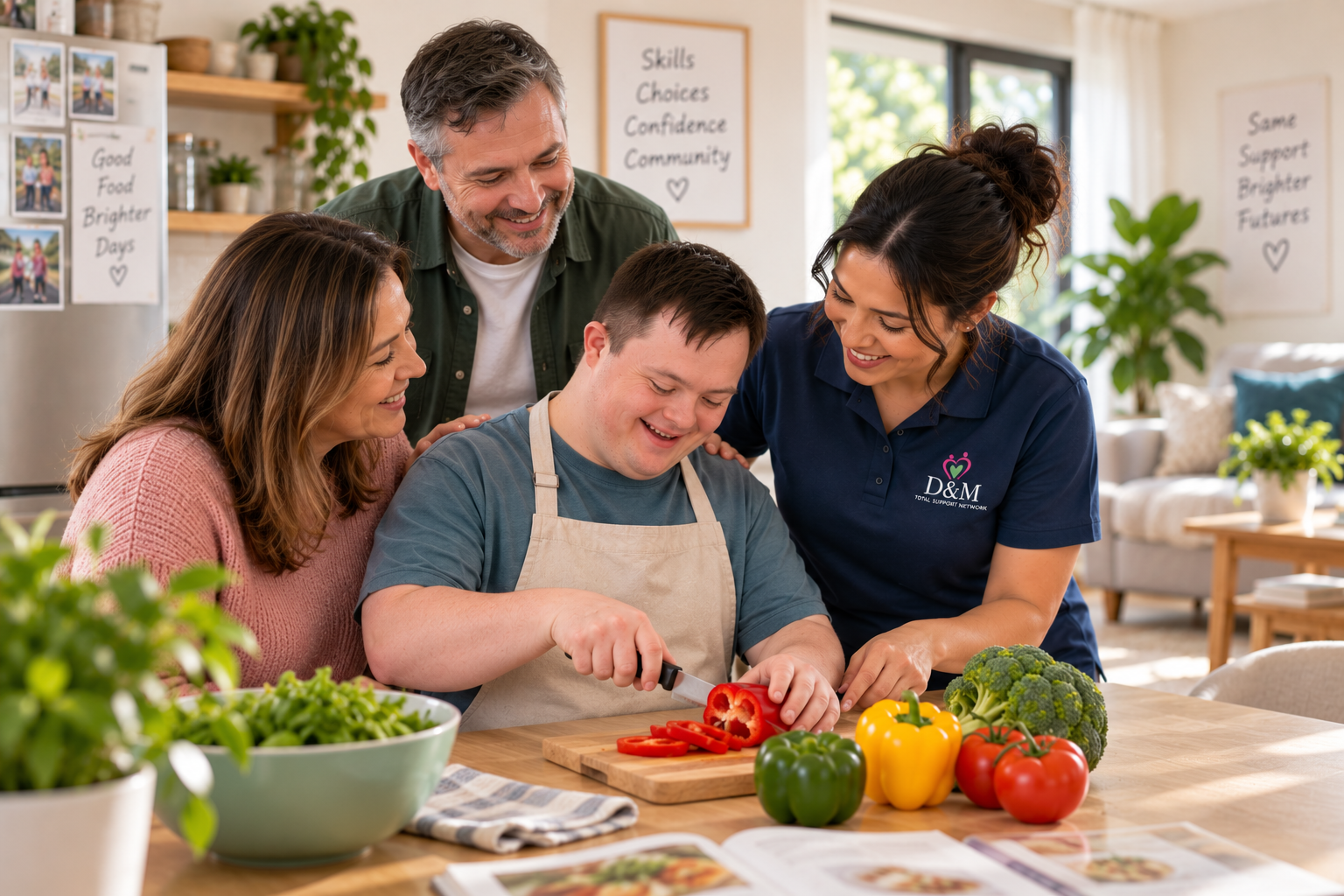

Supported Independent Living (SIL) provides disability-related supports that help participants live as independently as possible in their home.
Depending on a participant’s approved NDIS funding, supports may include assistance with:
SIL funding pays for disability-related supports, not the participant’s rent, mortgage, groceries, utilities or other everyday living expenses.

Moving into a new home is a significant life event.
Participants may experience:
Families often experience similar emotions, particularly if they have provided care for many years.
These feelings are normal and usually become easier as everyone adjusts to the new routine.

One of the biggest adjustments for families can be allowing the participant to become more independent.
This may involve encouraging them to:
Independence develops gradually, and every achievement builds confidence.

Open communication helps everyone work together effectively.
Many providers encourage regular communication with families, provided the participant has given consent.
Communication may include:
The participant should always remain at the centre of conversations and decision-making.

Under the NDIS, participants have the right to make decisions about their own lives wherever possible.
This includes decisions about:
Families continue to provide valuable support while respecting the participant’s growing independence and right to make choices.

Positive relationships between families and support workers can create better outcomes.
Helpful approaches include:
Working together creates consistency for the participant and helps everyone understand how best to provide support.

Families often have valuable insights into the participant’s strengths and aspirations.
Goals may include:
Celebrating progress — no matter how small — helps motivate continued growth.

Support needs can change over time.
Regular reviews help determine whether supports continue to meet the participant’s needs.
Reviews may consider:
Families can often contribute useful information during review discussions when the participant wishes them to be involved.

If something does not seem right, families should feel comfortable raising their concerns.
This may involve discussing:
Most concerns can be resolved through open and respectful communication with the provider.
If necessary, participants also have access to formal complaints processes through their provider and, where appropriate, the NDIS Quality and Safeguards Commission.

Many family members have spent years providing daily care.
When a participant moves into SIL, carers often experience a significant change in their own routine.
It is important for families to:
Supporting the participant’s independence also creates opportunities for families to enjoy a different type of relationship.

When choosing or working with a SIL provider, consider asking:
These questions can help families better understand how supports will be delivered and what to expect throughout the transition.
At D&M Total Support Network, we understand that Supported Independent Living is not just a transition for participants — it is also a transition for their families.
We work closely with participants, families, Support Coordinators and allied health professionals to create supportive, person-centred environments where participants can develop independence while maintaining strong connections with the people who matter most. Our focus is on open communication, respect, consistency and helping every participant achieve their individual goals.
Whether a participant is preparing to move into SIL or already receiving supported independent living services, we’re here to provide practical, compassionate support throughout their journey.
D&M Total Support Network
Supporting participants to thrive independently while partnering with families every step of the journey.
Have questions about our cleaning services? Our friendly team is ready to assist you.
Our team can walk you through any document over the phone or in person. No pressure, no jargon.
D&M Total Support acknowledges the Traditional Custodians of the lands on which we work and live. We pay our respects to Elders past and present, and to all Aboriginal and Torres Strait Islander peoples who continue to care for Country and community.
© 2026 D&M Total Support. All rights reserved.
© Website designed & developed by CareSync Support Solutions.