Living with Parkinson’s disease can present daily challenges that make household cleaning more difficult. Symptoms such as tremors, muscle stiffness, slower movement and changes in balance can turn routine chores into physically demanding tasks.
A clean, organised home can improve comfort, safety and independence. By adapting cleaning routines and seeking assistance when needed, people living with Parkinson’s disease can create an environment that supports their wellbeing.

Cleaning doesn’t have to be completed all at once.
Breaking larger jobs into smaller tasks can help reduce fatigue. Instead of cleaning the entire house in one day, consider focusing on one room or one task at a time.
For example:
Taking regular breaks is just as important as completing the task. A slower, more manageable routine can help prevent cleaning from becoming overwhelming.

Reaching, bending and stretching can increase the risk of losing balance.
Store everyday cleaning items such as:
between waist and shoulder height whenever possible.
Avoid climbing on chairs or ladders to reach high shelves. Keeping frequently used items within easy reach can make household tasks safer and more manageable.

A tidy home is often a safer home.
Keeping floors clear of unnecessary items can help reduce the risk of trips and falls.
Consider:
Small changes can make moving around the home easier and safer.

Heavy buckets and bulky vacuum cleaners can be difficult to manage.
Where possible, choose equipment that requires less physical effort, such as:
Using lightweight and easy-to-handle equipment can make cleaning more manageable while reducing the physical demands of household chores.

A little cleaning completed regularly is often easier than allowing jobs to build up.
Maintaining a simple routine helps keep the home comfortable without becoming overwhelming. Even small tasks completed consistently can have a positive impact on the cleanliness, organisation and safety of the home.

Some days may be easier than others.
It’s important to recognise when fatigue, stiffness or balance changes make cleaning unsafe. There is no harm in leaving tasks for another day or asking for assistance when needed.
Protecting your health should always come first.

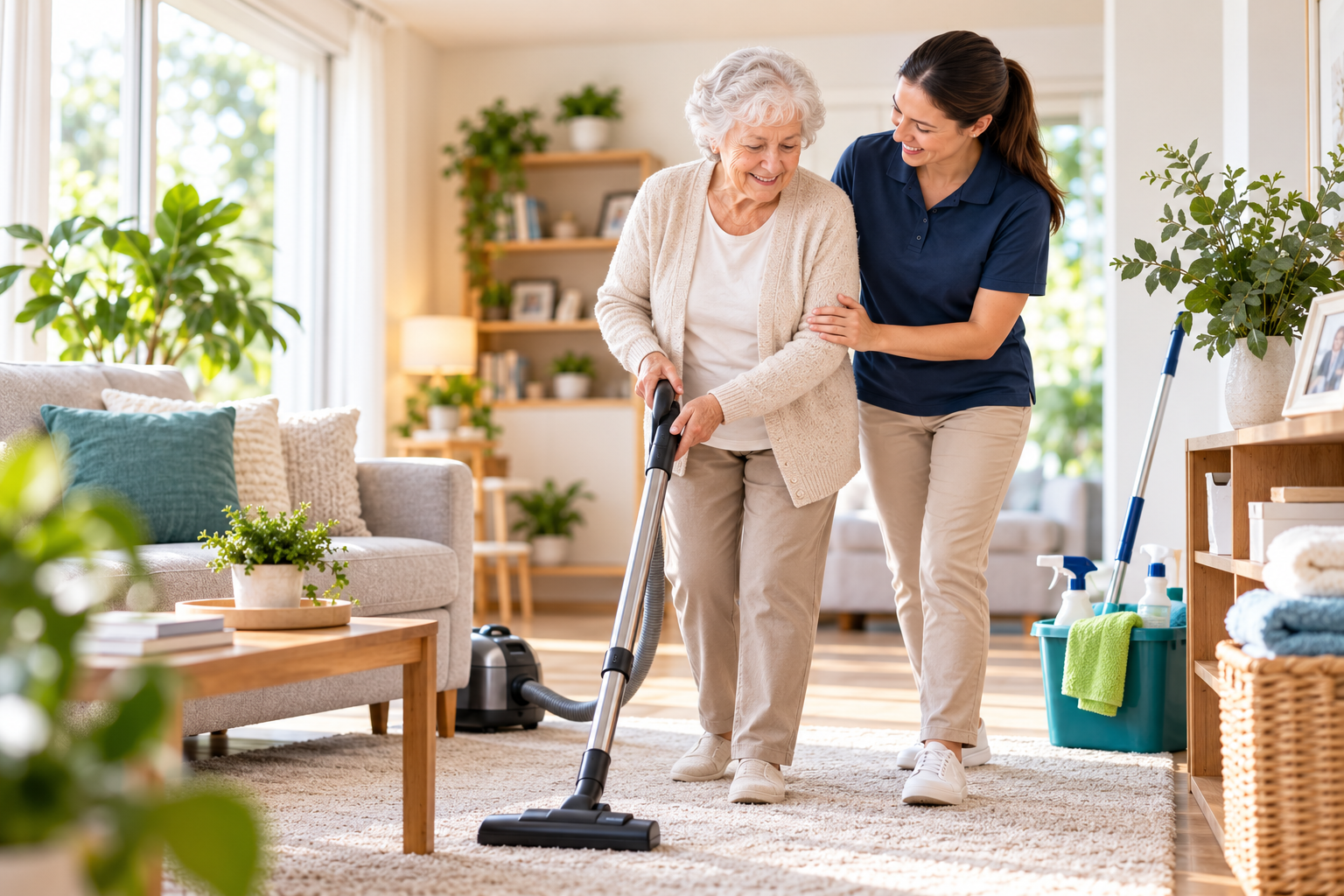
Many people believe asking for help means losing independence. In reality, receiving assistance with physically demanding household tasks can allow people to conserve energy for activities they enjoy.
This may include:
Support can help maintain independence — not reduce it.

Bathrooms can become slippery when wet, making safety particularly important.
Simple habits include:
If recommended by a health professional, equipment such as grab rails or shower chairs may also improve safety.
At D&M Total Support Network, we understand that Parkinson’s disease affects everyone differently.
Our professional cleaning team works respectfully with each participant to provide reliable domestic assistance that supports safety, dignity and independence. Whether you require occasional assistance or regular cleaning services, we tailor our support to your individual needs and preferences.
Our goal is simple — to help you spend less time worrying about household chores and more time focusing on the things that matter most.
D&M Total Support Network
Supporting independence through practical, compassionate cleaning services.
Have questions about our cleaning services? Our friendly team is ready to assist you.
Our team can walk you through any document over the phone or in person. No pressure, no jargon.
D&M Total Support acknowledges the Traditional Custodians of the lands on which we work and live. We pay our respects to Elders past and present, and to all Aboriginal and Torres Strait Islander peoples who continue to care for Country and community.
© 2026 D&M Total Support. All rights reserved.
© Website designed & developed by CareSync Support Solutions.